





Gold struggles as solid US data propel dollar higher

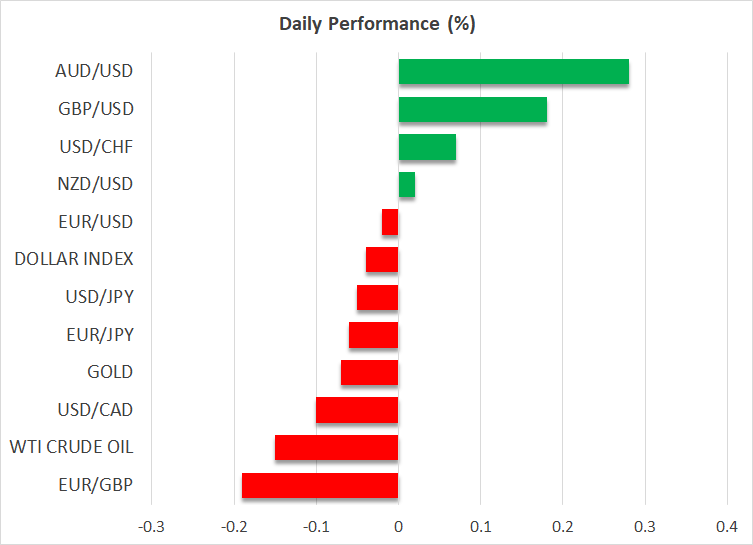
Traders recalibrate Fed rate path
Another round of encouraging US data prompted traders to further scale back bets on Fed rate cuts, sending the dollar flying higher on Monday. One of the most important leading indicators of the US economy - the ISM non-manufacturing survey - pointed to stronger growth ahead with new business orders and employment conditions improving substantially.
Coming on top of a sizzling employment report last week, the ISM survey was another piece of the puzzle suggesting the Fed won’t rush into rate cuts this year. The dollar shot higher with some help from rising yields, extending the rally that has seen the greenback gain over 3% already this year against a basket of major currencies.
Gold prices suffered at the hands of an appreciating dollar and rising real yields, both factors that dampen demand for the precious metal, which is denominated in dollars and pays no yield. That said, the decline has not been dramatic and bullion is still trading about 5.5% away from record highs.
Safe haven flows and direct purchases from central banks seem to have neutralized some of the selling pressure on gold driven by Fed rate cuts being pushed back, preventing any deep losses. A move either below $2,000 or above $2,065 is needed to signal what’s next for gold.
Aussie climbs on RBA and China hopes
In Australia, the Reserve Bank kept interest rates unchanged earlier today and maintained the view that “a further increase in interest rates cannot be ruled out”, even as it revised down its growth forecasts. The Australian dollar popped higher on the news, although most of the gains evaporated in the following hours.
Hopes that China is preparing to roll out more forceful stimulus measures helped the aussie as well, after reports that President Xi Jinping will meet with regulators to discuss market conditions. Stock markets in mainland China and Hong Kong rose more than 3.5% on the anticipation of stronger stimulus, recovering a chunk of their recent losses.
The question is whether this is the beginning of a true turnaround for Chinese assets or simply a dead cat bounce. An ongoing crisis in the property sector, a slowdown in global manufacturing, and a rapidly declining birthrate are difficult problems to overcome, especially when high private debt levels limit Beijing’s ability to roll out heavy-handed stimulus.
Nvidia keeps the stock market standing
Shares on Wall Street took a small step back yesterday as the Fed repricing and rising yields proved stronger than optimism around economic growth. The underperformance came mostly from rate-sensitive sectors such as real estate. A sharp slide in Tesla also helped sellers.
Once again though, Nvidia played the role of Atlas and kept the entire stock market propped up. Nvidia rose nearly 5% to hit new record highs, extending the supernova move that has seen its shares climb 40% already this year on expectations that the artificial intelligence fever will supercharge its earnings growth.
As for today, the economic calendar is low key. The spotlight might fall on some speeches by Fed officials such as Mester (17:00 GMT), Kashkari (18:00 GMT), and Collins (19:00 GMT). Beyond that, the focus will shift to New Zealand’s latest employment report.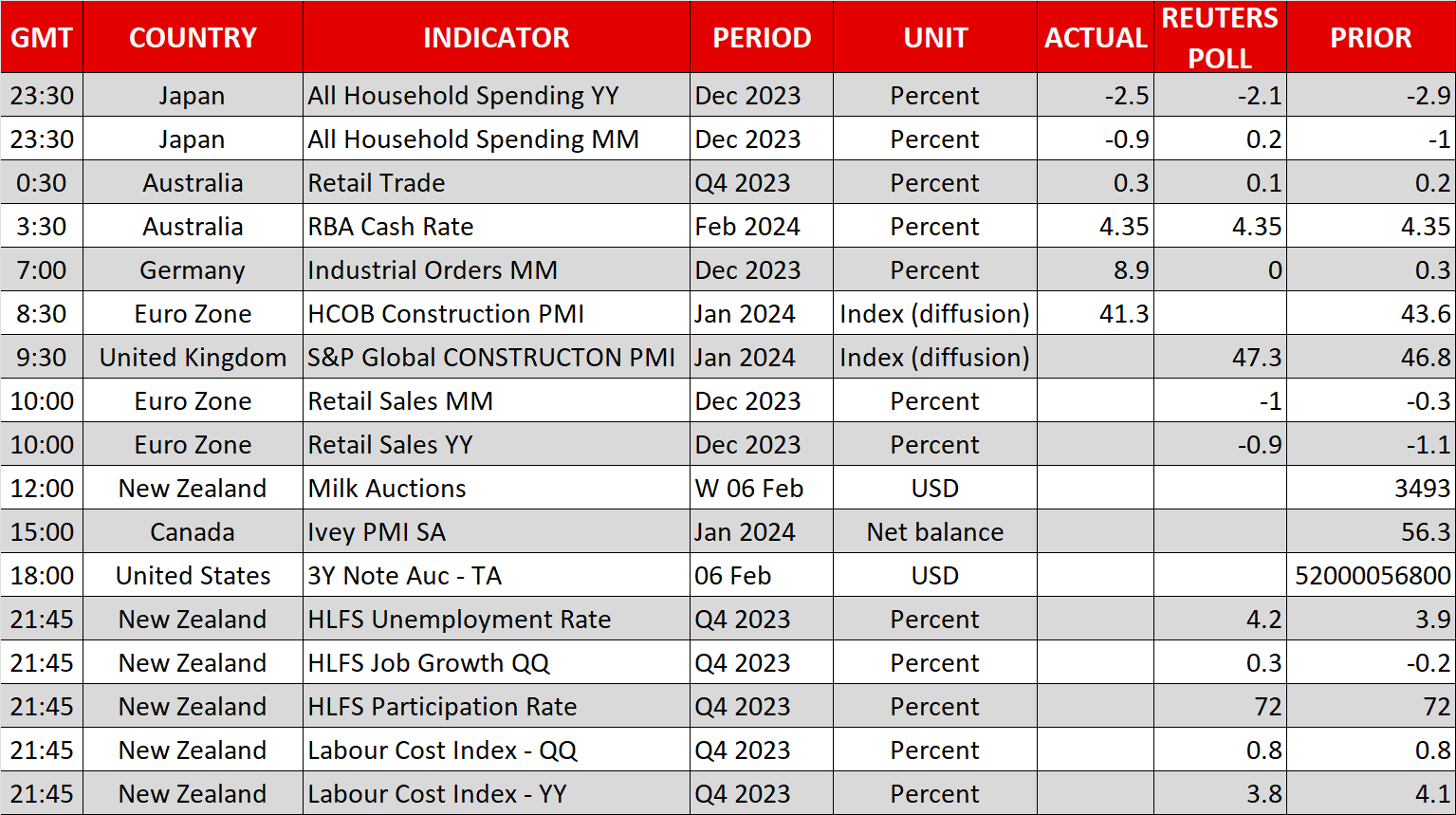


Copper Signals a Potential Turning Point for Commodity Markets

Weekly Recap and Forecast: Gold and Silver Rebound on Weak NFP Numbers. Crude Brent falls to $70 a barrel

The dollar: has the trend been broken?

Soft jobs report pressures dollar, gold surges, stocks mixed

Yen Volatility Heightened by Intervention Risk and Soft US Jobs

NFP Below Forecasts, Fed Bets Repriced - CPT Markets

EBC Markets Briefing | Crude prices up as inventory extended decline