





The dollar outperforms safe-haven assets


The dollar outperforms safe-haven assets
· EURUSD stabilises on non-farm payrolls expectations.
· The yen, franc and gold cannot compete with the greenback.
The US dollar is behaving like a classic safe-haven asset. It followed the S&P 500, which fell at the start of trading but then saw investors buy the dip. As a result, EURUSD managed to recoup most of its losses, even amid positive unemployment benefit claims data and expectations of strong non-farm payrolls figures.
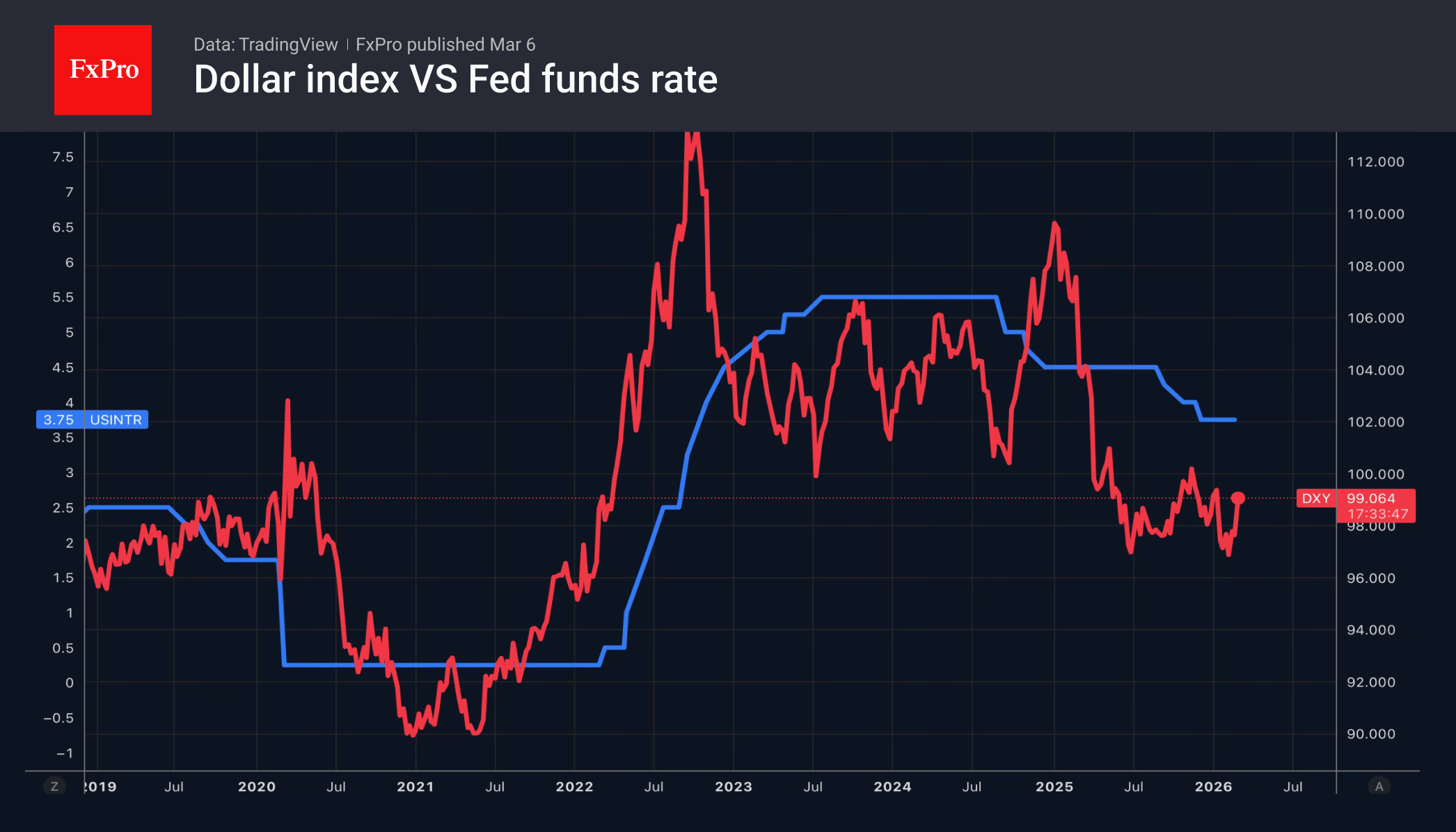
For the first time in a long time, the futures market has lowered the probability of two Fed rate cuts in 2026 to less than 50%. The chances of a rate cut in June have fallen to 35%, and in July to 52%. Strong employment statistics for February could bring them down even further, allowing the US dollar to continue strengthening.
At the same time, the Polymarket interest rate market does not expect the armed conflict in the Middle East to end before May. The chances of the conflict ending in April are estimated at 45%, and in March at 24%. Rumours about Iran's readiness for negotiations and its intentions to give up its uranium reserves had little effect on them. The estimated timeframe is longer than the 4-5 weeks announced by Donald Trump. If this is the case, pressure on the EURUSD is likely to continue and even intensify.
Not only the currencies of energy-dependent Europe, but also other safe-haven assets are reluctant to resist the US dollar. About 90% of Japan's oil and gas imports come from the Middle East. Rising oil prices, import costs and union demands for higher wages increase the chances of a stagflation scenario. As a result, USDJPY is returning to its January highs, and the likelihood of currency intervention is rising.
The Swiss National Bank's willingness to intervene in the Forex market is holding back the franc. The SNB fears that excessive currency strength will slow inflation, which is already close to zero. As a result, it will have to return to a policy of negative interest rates, which has many side effects.
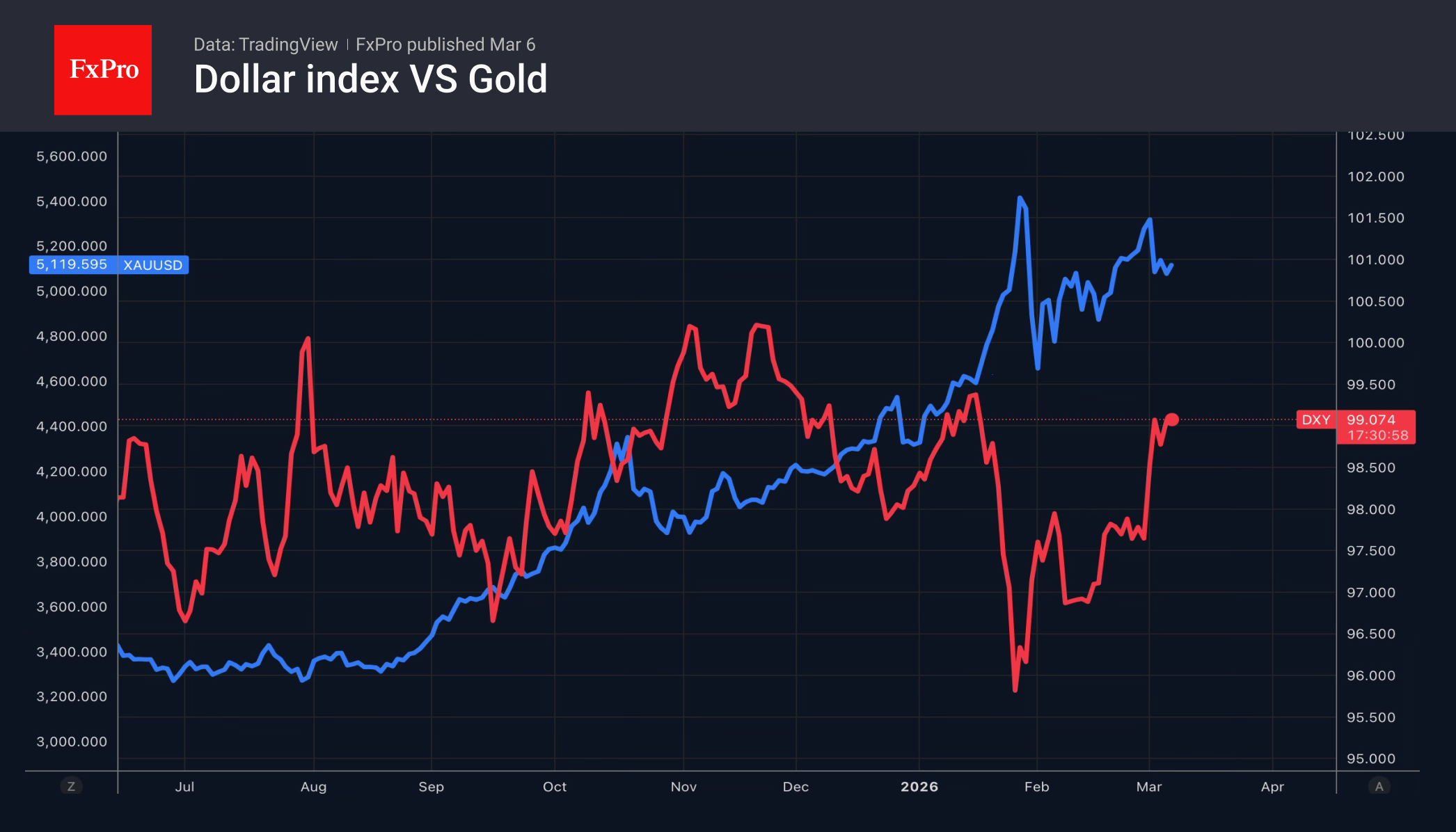
Gold risks repeating the scenario of four years ago. After the start of the armed conflict in Ukraine in February 2022, the precious metal rose slightly and stabilised. However, fears of accelerating US inflation and the Fed's aggressive rate hikes subsequently sank gold.
By the FxPro Analyst Team


The dollar: Has it peaked?

Yen Stays Under Pressure as US-Japan Rate Divergence Persists

Hot PCE Lifts Dollar; Gold Holds Below $4,000

History Is Siding with the US Dollar Again

Japanese Yen Finds Support on Intervention Fears as Precious Metals Remain Under Pressure | 25th June, 2026
EUR/USD – The Euro Just Hit a One-Year Low, and Today's Data Could Push It Lower
Gold Falls Below $4,000; Oil Extends 4% Decline