-1162026812.png)
-1162026812.png)





SPX vs SPCX: Spot the Difference

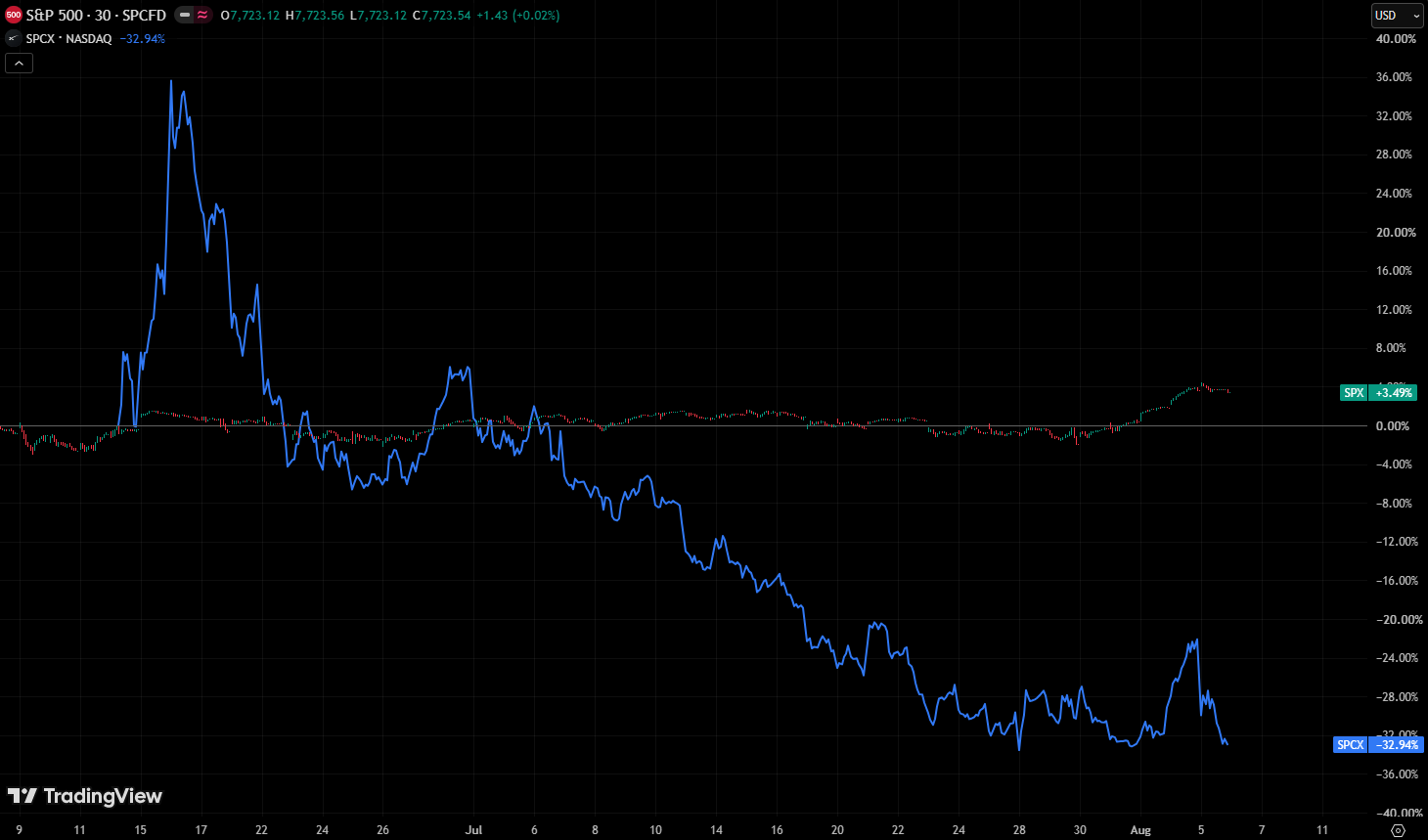
SpaceX (SPCX) shares have made a successful landing following their post-IPO launch. However, the stock has significantly underperformed the SPX (S&P 500 Index), highlighting a notable divergence in relative performance.
Today marks the expiry of the post-IPO lock-up period, potentially releasing 911.5 million shares into the market. This represents a substantial potential increase in available supply and could weigh on the share price should early investors decide to realize gains. Market participants will therefore be watching closely to assess whether the additional supply translates into meaningful selling pressure or is absorbed by underlying demand.
The expiry of a lock-up period is often one of the first significant tests for a newly listed company. Whilst it does not necessarily result in heavy selling, it removes restrictions on insider holdings and materially increases the number of shares that can potentially enter the market. Investors therefore tend to approach such events with greater caution, particularly when valuations remain elevated.
From a technical perspective, SPCX has yet to demonstrate the relative strength required to match the broader US equity market. Whereas the S&P 500 continues to benefit from diversified earnings growth and broad institutional support, SPCX remains more dependent on company-specific developments and investor sentiment. Until relative performance begins to improve, the stock may continue to lag the benchmark index.
The market's initial reaction to the lock-up expiry will provide valuable insight into underlying demand. If the additional supply is absorbed without significant downward pressure, it could indicate strong institutional interest and reinforce confidence in the longer-term investment case. Conversely, sustained selling would suggest that the market requires a lower valuation before attracting fresh buyers.
Looking ahead, investors are likely to focus less on the lock-up event itself and more on the company's execution, earnings trajectory and strategic milestones. Whilst short-term volatility may increase as the market adjusts to the expanded free float, longer-term performance will ultimately depend on the business fundamentals rather than the temporary technical impact of additional share supply.


Midweek Technical Look – AUDUSD, USDCAD, Nvidia
Today Fundamental Analysis: Dow Jones and the S&P 500 break new record highs on strong earnings

Today Technical Analysis: Gold jumps above $4,300 an ounce as the US dollar remains relatively weak

EBC Markets Briefing | Euro Stoxx 50 near record peak amid tech rally

Oil wavers amid doubts about Hormuz deal, stocks ease from record

Oil Markets Stabilize as Hormuz Agreement Eases Supply Concerns | 6th August, 2026

USD/JPY Holds Course After Interventions, but No One Knows What Will Happen Next